


DISCIPLESHIP MOMENT
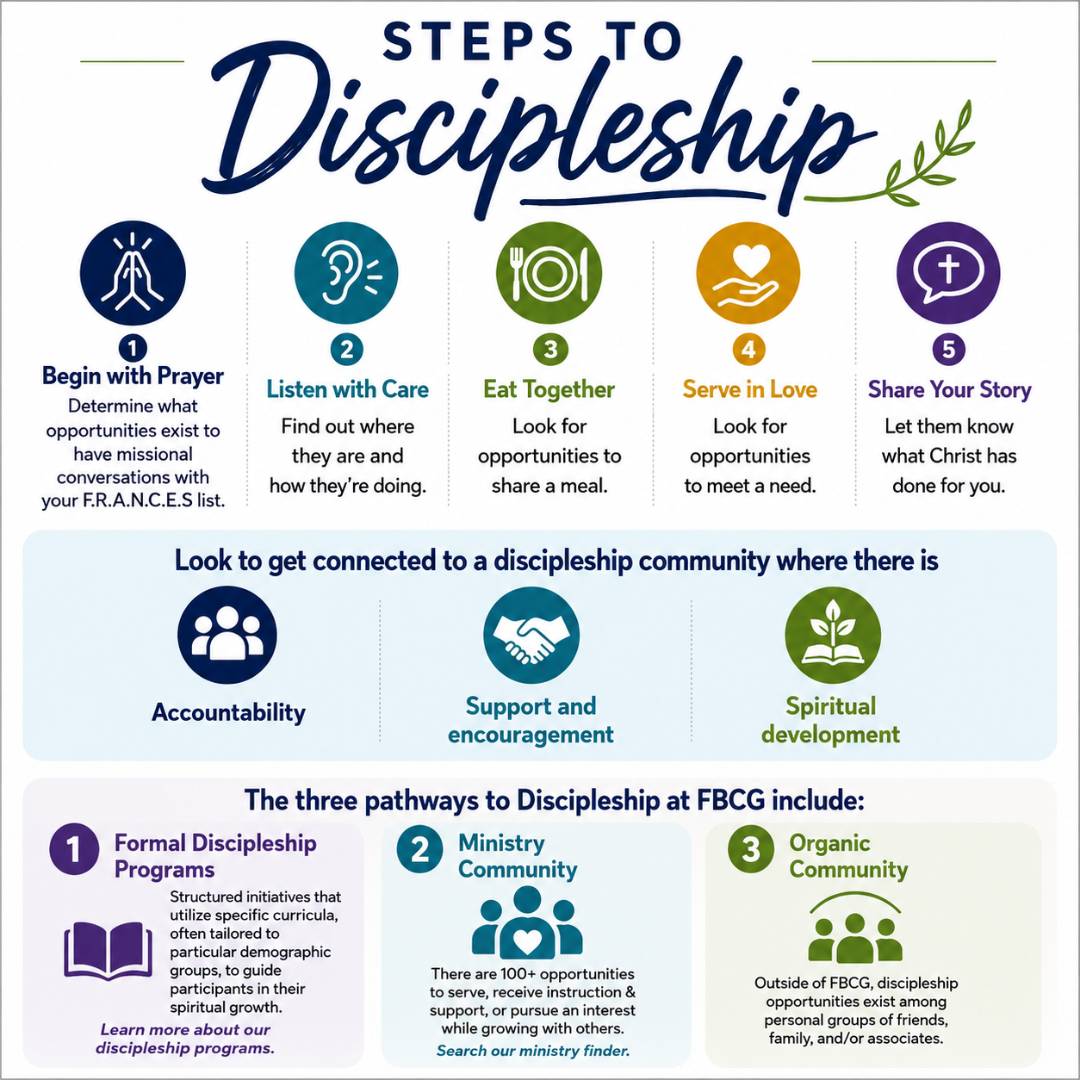
Engaging in a discipleship community is essential for spiritual growth and development. Whether you’re connecting with friends and family or participating in one of the FBCG ministries, the Discipleship Moment offers a valuable opportunity to delve deeper into Sunday messages. This initiative is dedicated to strengthening our journey of faith as we grow together as a church family. To maximize your experience, be sure to carve out time in your meet ups to collectively walk through the Discipleship Moment.
Scriptures: 1 Corinthians 7:7-9, 25-35 NKJV
Summary:
Pastor John K. Jenkins, Sr. continued teaching on relationships, emphasizing that singleness is a gift from God, not a deficiency, punishment, or condition to escape. Drawing on the Apostle Paul’s teaching in 1 Corinthians 7, Pastor explained that both marriage and singleness have value, and neither determines a person’s spiritual worth or ability to fulfill God’s purpose. Rather than allowing loneliness, societal expectations, or the desire for marriage to create discontentment, believers should appreciate their present season and pursue God’s will for their lives. Marriage brings additional responsibilities and challenges, while singleness provides unique opportunities for spiritual growth, personal development, and undistracted service to God. Pastor encouraged singles to maintain their standards, embrace their relationship with Christ, and remember that the ultimate goal is not marriage, but being where God wants us to be.
1. Singleness Is a Gift (v. 7)
The Apostle Paul teaches that singleness, like marriage, is a gift from God. We are to respect, value, and cherish singleness. Singleness offers opportunities to grow spiritually, develop personally, and discover God’s calling.
Discussion Questions:
Why do you think the culture—and sometimes even the church—treats singleness as a problem to be fixed rather than a gift to be received?
How have you personally viewed singleness in the past—as a gift, a waiting room, a deficiency, or something else?
How can we recognize and appreciate singleness as a gift from God rather than seeing it as a sign that something is missing from our lives?
What might change in our attitudes, priorities, and actions when we focus on the opportunities God has given us for spiritual growth, personal development, and fulfilling His purpose?
2. Singleness Is Good (vv. 8, 25–28)
Paul affirms that remaining unmarried can be good. Marriage is also good, but it should not become the defining goal of a believer’s life.
A. The Encouragement to Stay Where You Are (vs. 25–27) - Appreciate the season God has given you, without letting outside pressure or the desire for marriage create discontentment. The goal is to follow God's will, not society's expectations.
B. The Caution About Marriage (v. 28) - Marriage introduces responsibilities and challenges that singles do not necessarily experience. Marriage requires commitment, sacrifice, patience, communication, and adjustment. It does not automatically eliminate loneliness, difficulties, or personal struggles.
Discussion Questions:
What are some common misconceptions people have about marriage, particularly the belief that it will eliminate loneliness or solve personal struggles?
Where in your life have you felt outside pressure—from family, friends, culture, or church—to pursue marriage?
How has that pressure affected your heart?
How can understanding the responsibilities, sacrifices, and challenges of marriage help someone make a wiser decision about whether and when to marry?
How will you practice contentment in your current season this month—not pretending nothing will change, but honoring God where you are today?
3. Singleness Allows Care (vv. 32–35)
Paul explains that singleness provides an opportunity to focus more fully on pleasing God without the additional responsibilities of marriage.
A. The Focus of Singles and Married (vs. 32–35) - Singles have greater flexibility to devote their time and attention to pleasing God, pursuing ministry, and fulfilling His assignments. Paul encourages believers to take advantage of this opportunity for undistracted devotion to the Lord.
Discussion Questions:
What does "undistracted devotion to the Lord" look like in a practical, daily sense?
How can singleness provide unique opportunities to deepen our relationship with God and serve Him without distraction?
What are some practical ways both single and married believers can intentionally prioritize their relationship with God while balancing the responsibilities and demands of everyday life?
Prayer of Personal Transformation:
Heavenly Father, thank You for Your Word and the wisdom You have given us through our discussion. Help us to recognize the value and purpose of every season of life and to find our fulfillment in You. Teach us to appreciate Your gifts, trust Your timing, and seek Your will above our own desires. Strengthen those who are married, encourage those who are single, and help us all to remain faithful to Your calling. May our lives and relationships bring glory and honor to You. In the matchless name of Jesus, we pray, Amen.